
08 — The Author
The man behind the memory.
William (Bill) Castro was eighteen when he raised his right hand at a recruiting station on Ala Moana. He was nineteen when men started following him up hills. He has spent the seventy-five years since carrying a debt he has never stopped trying to pay.
- From
- Hawaii Island
- Served
- Company C, 15th Inf.
- Serial
- 10104686
- Rank held
- Squad Leader, at 19
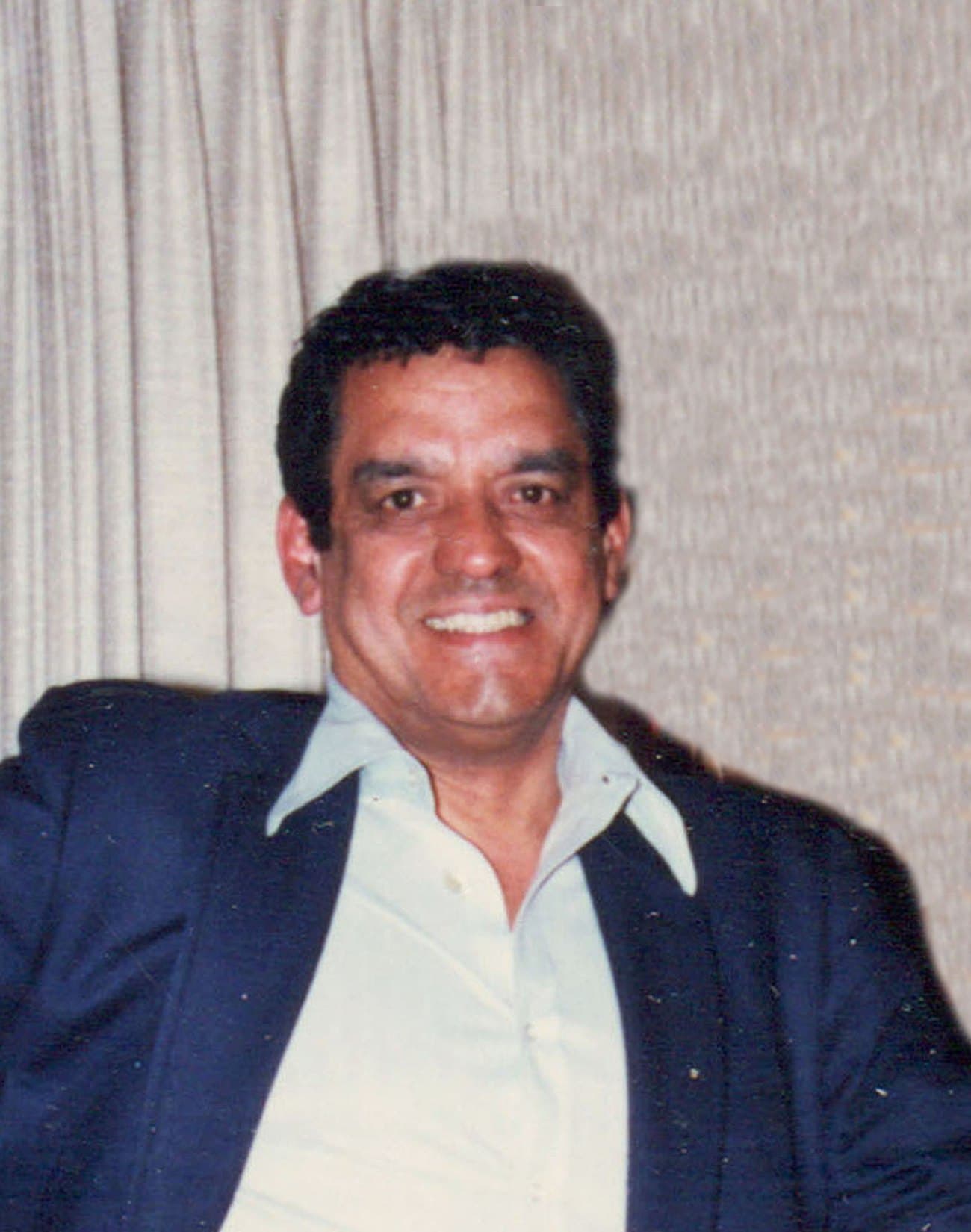
William (Bill) Castro
A two-hundred-acre farm, sold in a week, for one reason.
He was raised on the Big Island. His father owned two hundred acres of Hapu farm — tree fern harvested and sold as growing bases for orchids. His father had been an original cowboy on the old Parker Ranch, which is why Bill grew up a country music man, and why it landed the way it did when Leroy stood up in a bar and sang him a country song anyway.
His mother, Vicky, was originally from Maui — which is how a stranger named Joe turned out to already know her by name inside the first week of basic training. That is how small the Islands are.
He was a boy in Hilo town on that December day in 1941 when American soldiers came marching in, and he never forgot the feeling of being protected. Nine years later, when the coffins started arriving from Korea, he thought of enlisting as pay-back. When word reached his father that he had enlisted on another island entirely, his father sold the farm, gave up a successful business, and moved to Honolulu to be near him.
“In case you need me, my son.”
Nobody hands you papers. Somebody bleeds, and then it’s you.
He went to Korea as an ammunition bearer. He became the BAR man after his first night attack, Assistant Squad Leader after bandaging a neck wound in the dark, and Squad Leader after climbing into a ravine to wrap an arm torn open from wrist to elbow.
On May 22, 1951 — his nineteenth birthday, though he didn’t mention it until the walk home — he led the patrol that found close to a thousand enemy troops in a valley on the eastern front. A month later, almost to the day, they sent him to Hill 717.
Awards
- Combat Infantryman Badge
- Ambassador for Peace — Republic of Korea, 2016
Listed only as recorded in the author’s own papers and the supplied proclamation.
He went back to the country he was sent to at eighteen.
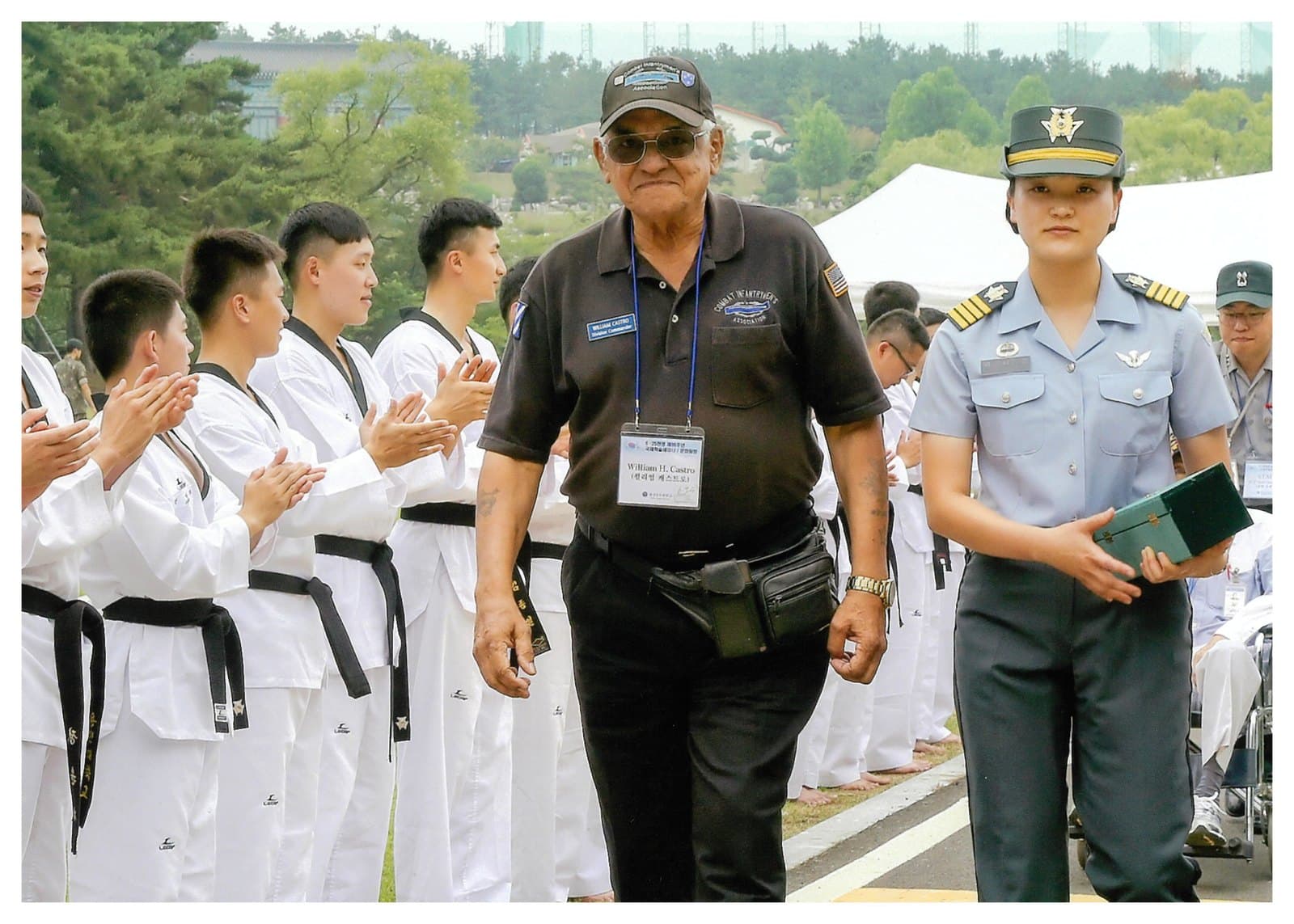
In 2016 the Republic of Korea named him an Ambassador for Peace. He walked a receiving line of young Koreans applauding him — the grandchildren of the country he had last seen as a line of orphans running through traffic toward a column of soldiers emptying their pockets into the street.
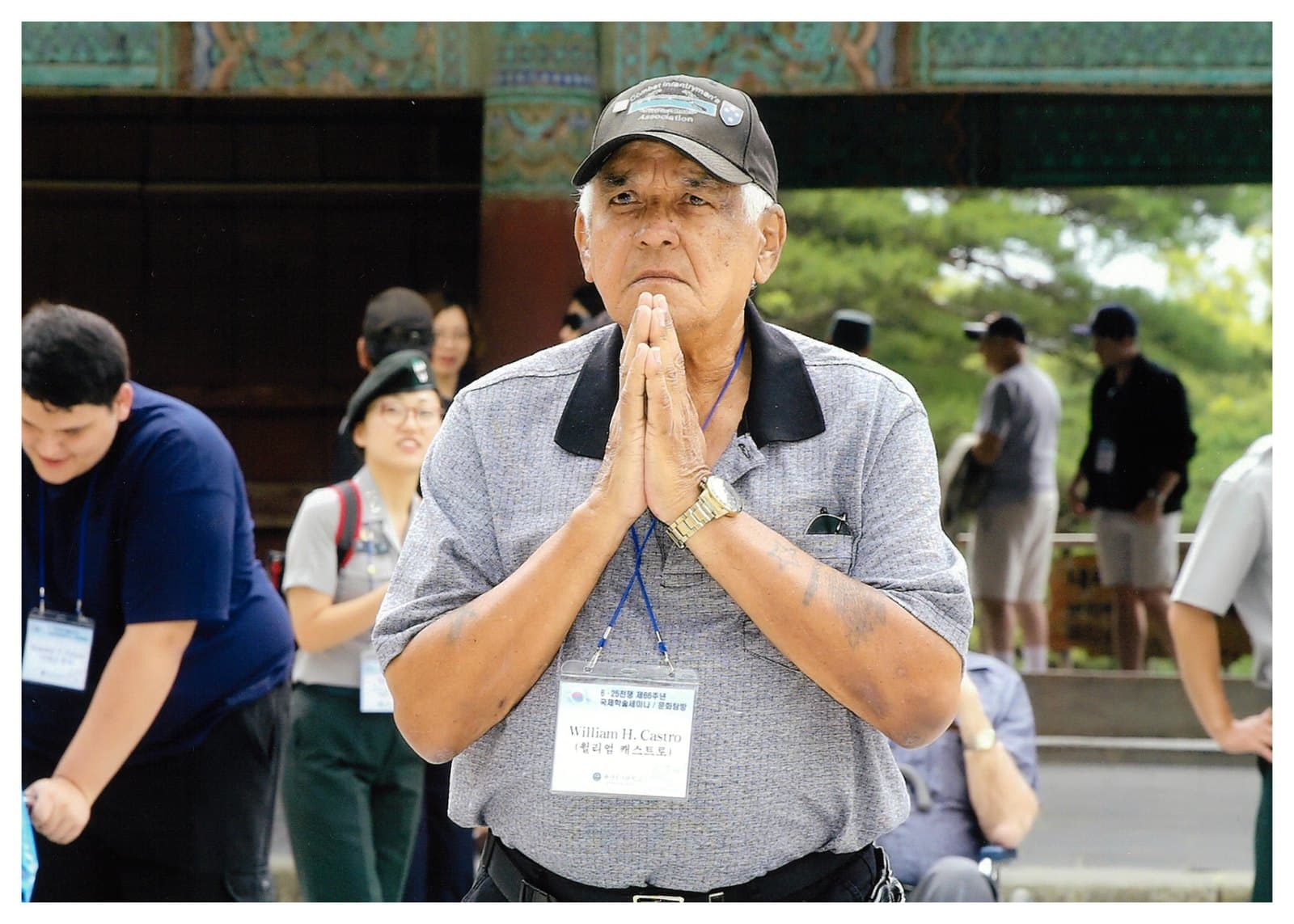
There is a photograph of him with his hands pressed together, looking up. There is no headstone he could visit. There is a name carved into the Wall of the Missing above Honolulu, and there is that.
“We cherish in our hearts the memory of your boundless sacrifices in helping us reestablish our Free Nation.”
“Is this country willing to look honestly at what was done on those Korean hills, by boys who were barely men, and give them — even this late, even one man at a time — their full and honest due?”
“I don’t know the answer. I’ve been asking it for a long time now, mostly to people who stopped answering their phones.”