
Hotel Street · Christmas Eve, 1950
05 — Remember Leroy
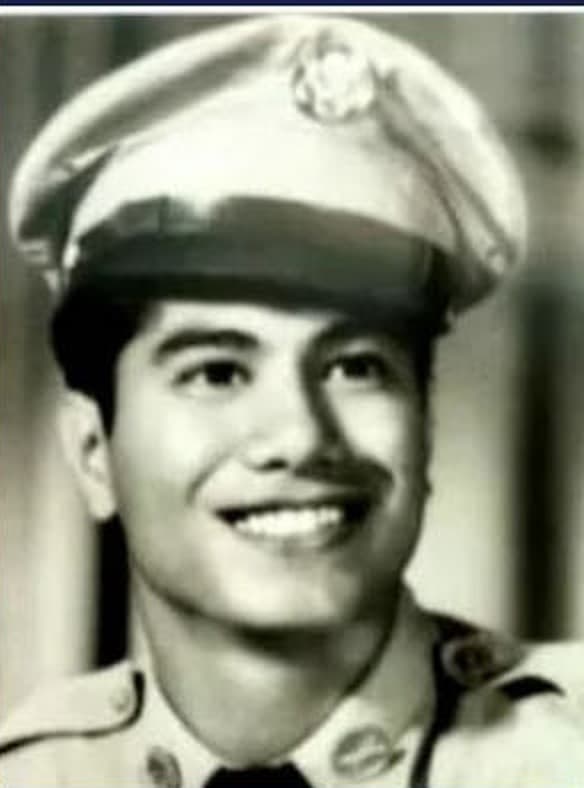
Leroy Kauhini
Seventeen when he enlisted. Eighteen when the hillside took him. He is not a casualty in this book. He is the reason there is a book.
- Born
- Feb 16, 1933
- Lost
- June 24, 1951
- Serial
- 10104661
- Home
- Kaimuki, Oahu
01
Leroy the boy
His mother had to sign the papers.
Seventeen, from the Kaimuki side of Oahu, and not old enough to sign his own way into a war. His father had died when he was a baby; his mother raised him alone, and her living room told you everything about how she had spent the years since — every wall covered in his school pictures, that unbroken record a mother keeps because she can't help herself.
When the boys came by on a weekend pass she brought out food, and the beverage was Kool-Aid, which four young soldiers held politely and pretended, with great sincerity, to be enjoying. They adopted her as a second mother on the spot, without a vote.
“Leroy's home is your home too, my boys.”
02
Leroy the friend
He couldn't stand the idea of a stranger standing alone.
In the first disoriented days at Schofield, while the rest were still working up the nerve to introduce themselves, Leroy was already moving through the barracks getting every name right the first time — making sure nobody got left standing by himself wondering where he fit. He didn't do it to be noticed. It was just how he walked into a room. His middle name was Saint John. His mother named him well.
And he sang. A voice nobody expected out of a seventeen-year-old from Kaimuki — smooth and unhurried, the kind you'd have guessed belonged to a much older man on the radio. Twice he stood up in a room full of strangers and sang a country song for Bill, when Leroy never sang country at all.
“I'm Leroy, and I want to dedicate this song to my buddy over there named Bill, He comes from the big Island, our Hawaiian Country Island.”
03
Leroy the soldier
He took the punch meant for the smallest man in the unit.
Every Friday was a G.I. Party, and Leroy was always finished before the rest had properly started. Instead of lying down and letting them catch up, he went looking for who hadn't — shining another man's brass, fixing another man's locker, never saying a word about it, smiling the whole time.
When Endo went absent and the whole company was restricted until somebody took a punishment hard enough to put him in the dispensary, Endo said he'd take it himself. Leroy was already stepping forward before he finished the sentence.
In Korea he carried the Browning Automatic Rifle for at least five months, waving off every replacement who could have taken the weight — saying the new men were too small and skinny for it, apparently not noticing he wasn't a big man himself. That was Leroy's arithmetic. His own back over somebody else's.
“No. You're too small to take a punch. I'll take the punishment for Endo.”
04
Leroy the brother
Twenty-five serial numbers apart, because they enlisted side by side.
His number was 10104661. Bill's was 10104686. They trained together, went on pass together, and fought the whole way through in neighbouring companies — close enough that Bill could pick him out of a firefight by silhouette alone: the shortest man in his squad, carrying a BAR like it belonged to him.
Leroy always got the most mail. His mother sent canned poi, dried and salted fish, Island goods that had no business surviving an ocean and a war — and every box had a note reminding him to be sure and share. As if he needed reminding. Somehow, through the flight and the train and the trucks, he had also held on to a ukulele.
“We really, really enjoyed each other during those times. It was the closest thing to home that Korea ever gave us.”
Twin Hills
Hill 717
June 23, 1951
All three rifle companies went up together.
The right side
Not a hill you climb. A hill you fight to get a boot into.
Evening
A sniper on the opposing summit had been finding his mark all day.
The last thing he said
“Take care of Abel and you too, brother. Aloha, my brother.”
0200 hours, June 24
The bugles started. Then the flares. Then silhouettes everywhere.
Bill did not learn the full shape of this until much later, piecing it together from men who saw more of it than he did.
Leroy left his BAR behind — the gun he wouldn’t hand to anyone else — and ran forward through open fire with nothing but his .45, because a machine gunner up ahead had been hit and was bleeding out at his gun. Leroy took over that gun and fired it accurately enough that the enemy stopped their advance and took cover. Then he carried the wounded gunner back to the lines himself.
And then, bleeding from his own wound the whole time, he ran back out to that exposed gun a second time and opened up on them again, and they broke off a second time.
His Platoon Leader saw the state of his arm and ordered him to the rear. Leroy said it was just a scratch, that he’d have somebody wrap it. That is the wrapped arm Bill saw that evening at Abel’s hole — the one he waved off as nothing.
The morning after
He stood on a trail that ran straight into two thousand men, and fired until the hillside took him.
Later, a man from Company B found Bill in the dark. “Did you see Leroy, man,” he said. “He had a whole bunch of dead Chinese in front of his hole.”
“I don’t know exactly how many of us are alive today because of those two mornings. I know that whatever the number is, it is not zero, and it would not exist without him.”
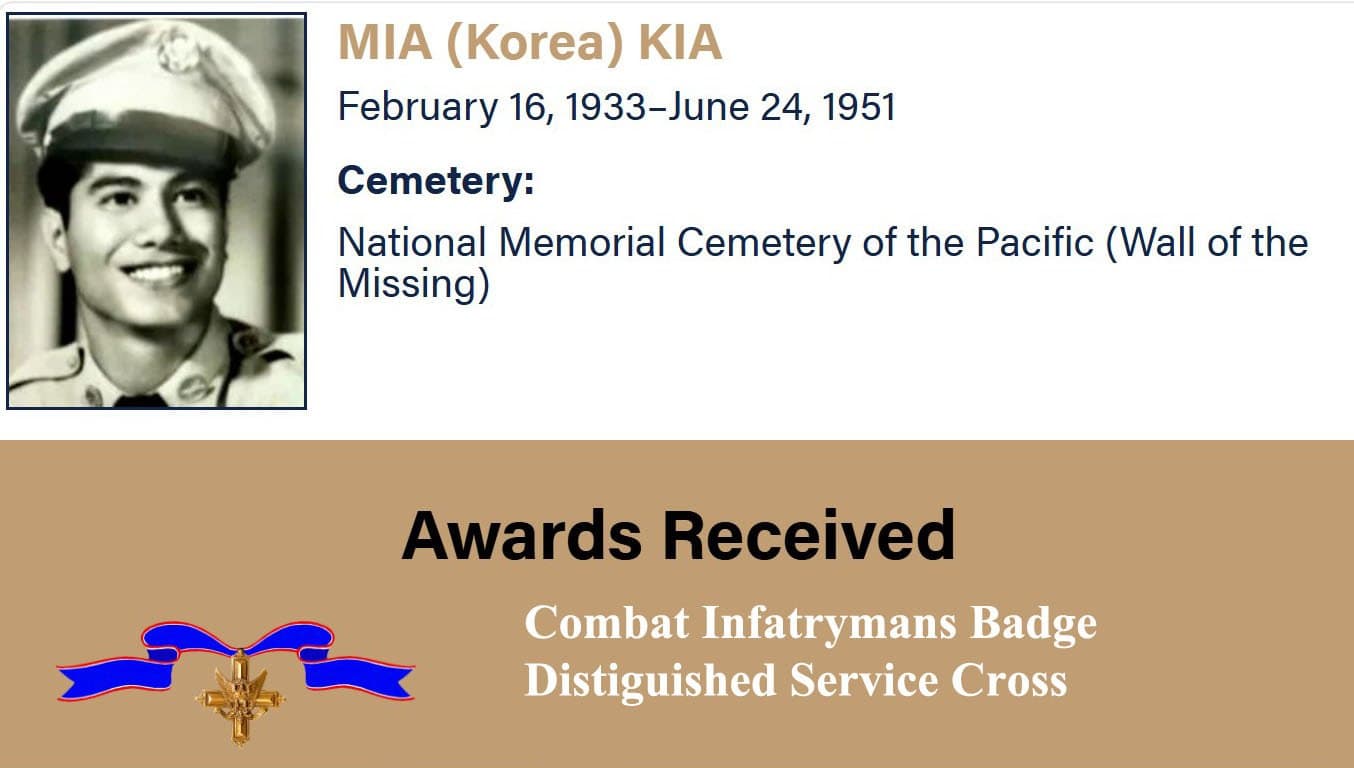
A question that has never been answered.
Leroy received the Distinguished Service Cross, the second-highest decoration this country gives for valor in combat. Bill has read that citation more than a hundred times, and every time he comes back to the same place: a man named Emory L. Bennett, fighting in that same general action, received the Congressional Medal of Honor for doing, by every account Bill can find, essentially what Leroy did on that second morning.
He raises it not as an accusation, but as a question he believes deserves an answer from somebody with the authority to give one. He has written to the Congressional Delegation more than once. He has written to the White House. He has shaken hands with politicians who agreed with every word — and then never called back.
“Like nobody wants to be bothered with the story of a Forgotten Warrior from a Forgotten War.”
He is careful to add that he doesn’t think Leroy would have cared much about a medal, and he knew him well enough to say so. That was never what moved him. But in fairness to every man who has ever put on a uniform and gone where he was sent, Bill believes he earned the higher recognition — and he will keep saying so for as long as he’s able to.
Leroy Saint John Kauhini
Remember Leroy.
He was a hero long before the Army ever sent him to a war. This book has tried to show you that, starting with a Friday night G.I. party and a locker that wasn’t his to clean.
Rest in Peace, Brother.