
06 — The War
Not a history. One man’s year.
The Korean War as it reached a nineteen-year-old rifle squad leader from the Big Island — the cold, the holes, the rations, the patrols, and the two mornings on Hill 717.
1st Battalion · 15th Infantry Regiment · 3rd Infantry Division
01
Arrival
A rifle they weren't allowed to load.
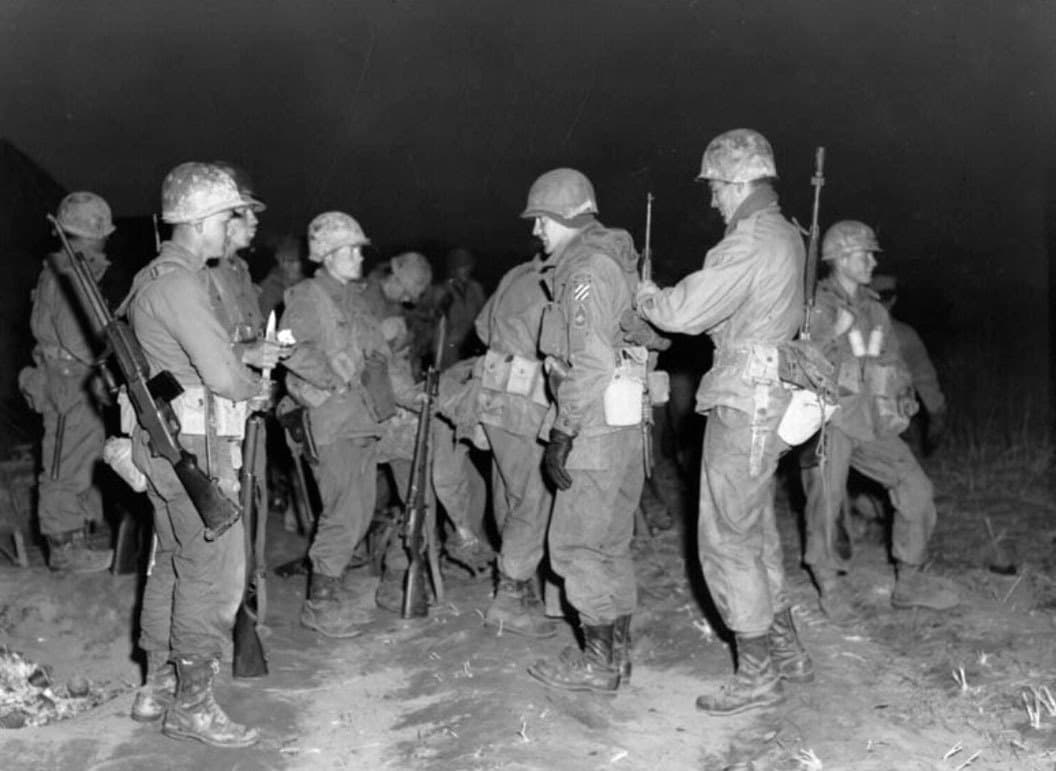
They came ashore at Pusan in the dark, in January 1951, and were marched to old Korean rail cars built around a single wood-burning stove — the only heat in the car, with twenty men packed around it trying to get close enough to feel it without catching fire.
Every man carried a rifle he couldn't load, which made all of them feel like they were walking around with a stick. When ammunition finally came it came one clip at a time: eight rounds per man, with strict instructions to keep it in the belt and not load it unless there was an emergency.
“What kind of war is this?” I said to no one in particular, and nobody in the car had an answer for that either.
- 8
- Rounds issued per man
- 1
- Stove per rail car
02
The Cold
Island boys on ice they had never seen a month earlier.
The jeeps took them as far as the road went and then turned around, and there wasn't another vehicle in sight. From there on they walked everywhere the jeeps couldn't go, which in Korea's frozen hills was almost everywhere.
Sleeping quarters were foxholes — or more honestly, plain holes packed with snow. Two men to a hole, two hours on and two hours off, the man who was supposed to be sleeping never really sleeping. Bill still had the canteen cup issued in Japan; most of the others had lost theirs and had nothing to drink from but the ration can, which meant they burned their hands every morning just to get their coffee down.
03
The Front
1st Battalion, 15th Infantry Regiment. Can Do.
A Sergeant Major welcomed them, named the regiment as the home of Audie Murphy — and then told them plainly not to try to be heroes, because real heroes never try to be heroes, and most die in combat. Bill has thought about that speech more times than he can count, mostly because of what happened later on a hill called 717.
The Hawaii boys were split across three rifle companies before any of them had fired a shot in anger. On his first night attack the BAR man left the position, Bill's rifle came apart in his hands in the dark, and he put it back together blind. At dawn the Platoon Sergeant looked at the ground around the hole and made him the squad's BAR man on the spot.
“Don't any one of you try to be a hero and die.” — He meant well by it, and he was right about most men. He just hadn't met Leroy yet.
04
Patrols
You go north. You do not fight. You do not get seen.
A C.R.B. patrol — Contact and Report Back — is built entirely out of not being noticed. Everything you have been trained to do when you meet the enemy, you do the opposite of. You put a foot down and you wait and you listen and then you put the other one down.
On May 22, 1951, Bill's squad went out with Roy, the Commo Chief, who could have sent any of his men and went himself with the Field 300 radio on his own back. They bellied up onto a long flat hill and looked over. Below them was a valley full of tents, vehicles, and close to a thousand men. Roy looked at it for a second and said one word — “Jackpot.”
- ≈1,000
- Enemy troops located
- 19
- Bill's age that day
05
Pusan
What the war produced.
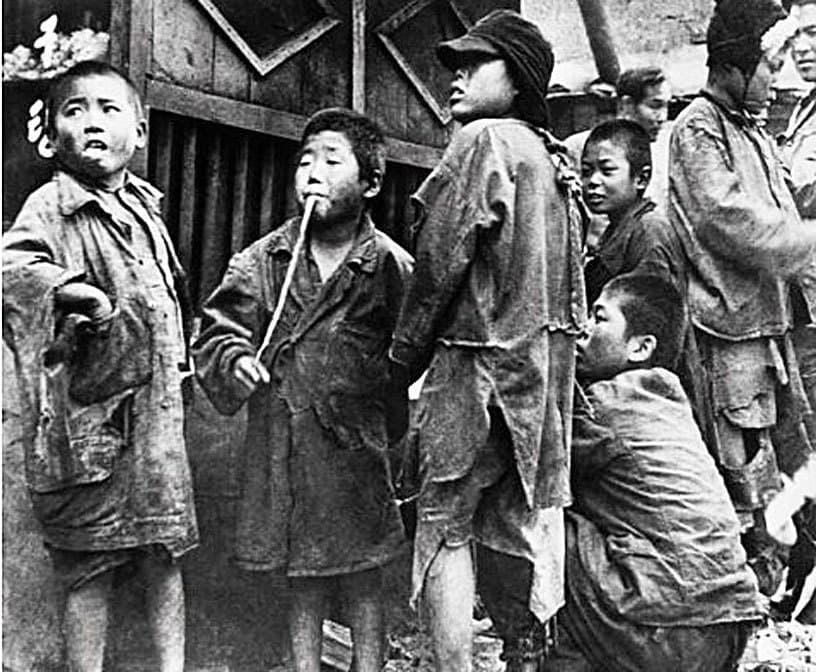
The part of Korea that stayed with them longest had nothing to do with combat. It was a hundred or more children swarming a column of soldiers on the walk back from a mess hall — clothes so torn you couldn't tell what colour the fabric had started as, bones visible right through the skin.
Every man in that column emptied his pockets right there in the street. It didn't feel like enough. It wasn't enough. None of them could look at each other while they did it.
06
The Mountains
The eastern front goes up, and then it keeps going up.
A regiment of the 2nd Division had been surrounded after a flanking unit pulled back and left a hole, and the enemy found that hole the way water finds a crack. So the 15th was sent east. Can Do, it says on the regimental crest, and Bill never once heard anybody in authority ask whether they could.
On the road in, they started seeing people. Hundreds. Civilians and soldiers both, all moving south, away from where the trucks were going. Old men carrying what they could carry. Women with children strapped to their backs. Nobody in the truck said anything.
When you are riding toward something that everybody else is running from, you have learned everything you need to know about where you are going.
07
Hill 717
Two enemy battalions against three rifle companies.
A mountain with two summits, and the men were calling it Twin Hills before they ever set foot on it. A sniper found Abel on the first evening while he was calling Bill's name.
At two in the morning the bugles started — the Chinese used bugles to signal an attack, and by June 1951 every man on that line knew the sound the way you know a dog barking at your own front gate. Over two thousand men, thrown at three companies that didn't add up to five hundred. Bill came down that jagged slope in the dark more or less alone, and had never memorized the password for that day.
“We're Americans, from the 15th Can-Do Regiment, 3rd Infantry Division. We've been overrun by Chinese on Hill 717.” — They waved us through. I have never in my life been so grateful for a sentence.
- 2,000+
- Enemy in the assault
- <500
- Men in three companies
08
Coming Home
Among the first Korean War soldiers to rotate from the Division.
After thirteen months they stood at the 3rd Division Replacement Center with roughly two hundred other troops. The Commanding General gave a farewell address, and at the end of it he singled out the small group of Hawaiians who had volunteered from their beautiful Islands — and thanked them for the fierce fighting force they had contributed, after they learned how to walk on the snow and ice.
The whole group laughed loud, then just as loud applauded. Abel came home to the Big Island. Joe went back to Maui and kept a ukulele within reach for the rest of his days. Pop Soares made it home. Roy stayed in the Army. Leroy was never found.
It made me older faster than I had any right to be.
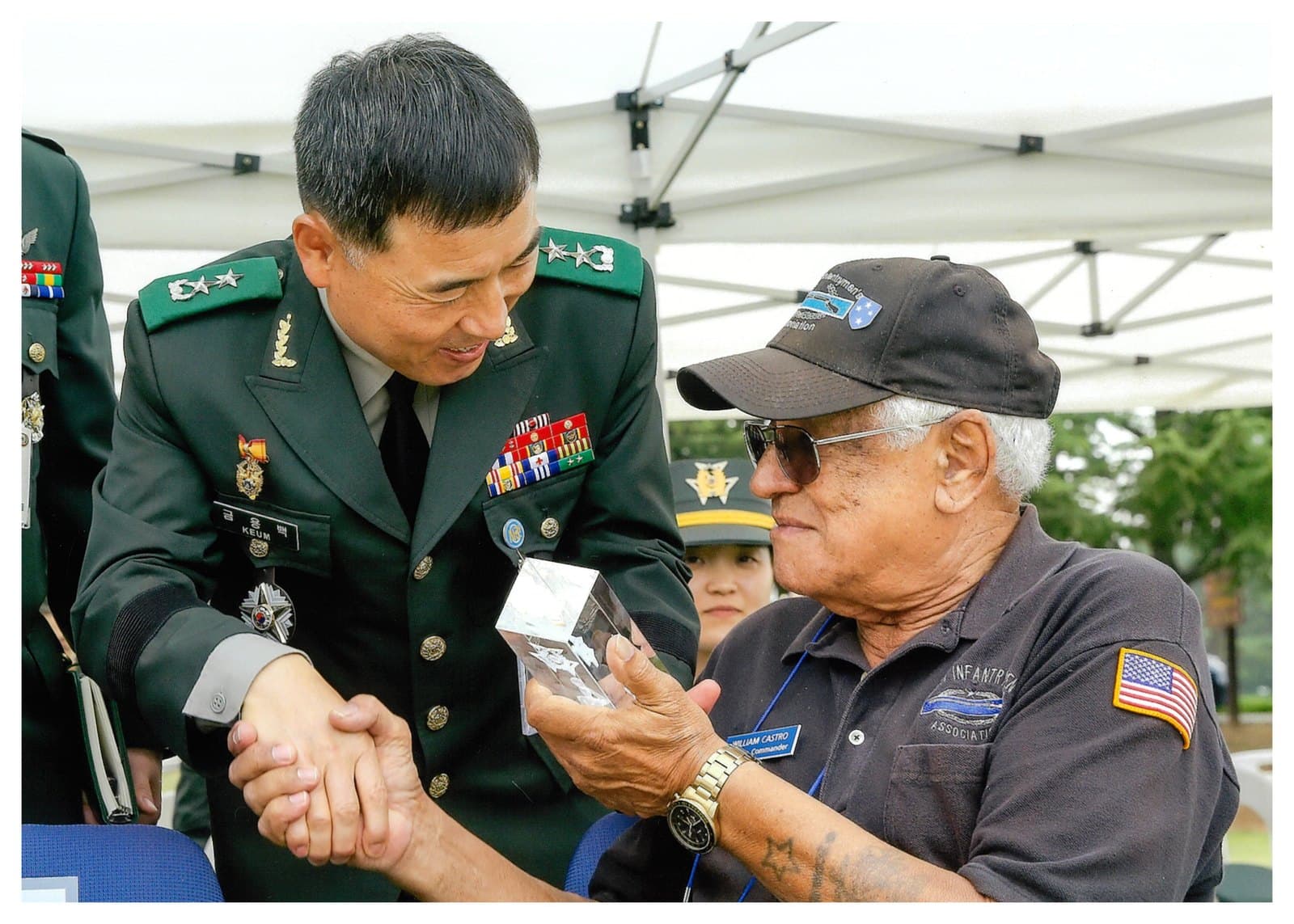
“It gave me a squad to lead at nineteen and took away my certainty that the world runs on anything like fairness. It gave me friendships that never loosened their grip on me for the rest of my life, and it took Leroy, and I have never once believed those two things balance each other out.”