02 — The Story
A story about people.
War is only the setting.
Seven movements, edited down from the manuscript — from the summer the coffins came home to the reason the book was written seventy-five years later.
From Paradise to Hell · William (Bill) Castro
I
The Call
Nobody ordered them to feel obligated. They just did.
The war broke in June of 1950, and it broke on the radio, in the newspapers, in the kind of talk that stops a whole island cold. The 5th Regimental Combat Team was pulled straight out of Hawaii, and within weeks the flag-draped coffins started landing back on the Islands. The war stopped being a headline. It had a face — sometimes a face you recognized from church.
Their fathers and uncles had answered the same kind of call in the last war, and they'd grown up in houses where that service was simply understood: not bragged about, not lectured on, just there, like the ocean was there. For Bill there was one older reason too. He was a boy in Hilo town in December 1941 when American soldiers came marching in, and he never forgot the feeling of being protected. Enlisting was pay-back.
“It was as automatic as breathing, and just as hard to explain to anyone who hadn't grown up breathing that same air.”
II
The Boys
Thirty-some of them, standing in a line that had never existed before that morning.
Abel, Bill's cousin from Hawaii Island. Joe from Maui, a musician who could make a borrowed guitar do things you wouldn't expect. Aguda, David — they called him Malau — Bonilla and Endo from Oahu. Pop Soares, thirty-two among a crowd of teenagers. Makaiwa and Kamalu off Kauai. And Leroy, seventeen, whose mother had to sign the papers for him.
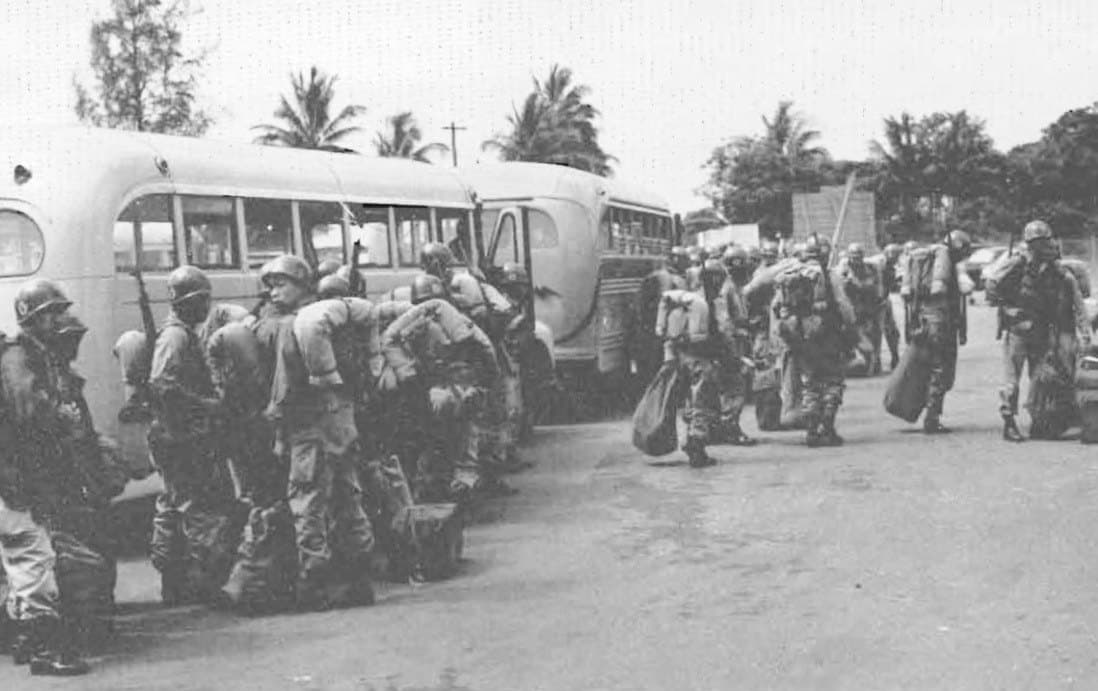
They swore in together at the Ala Moana recruiting station and raised their right hands at the same moment. Then the Army loaded them onto a bus, and nobody said a word the entire ride. Every man on it was doing the same arithmetic in his own head, and none of them had it finished yet.
“I want you to meet the rest of us now, before any of what follows happens to us.”
III
The Journey
Pineapple fields ran past the windows, and then Schofield appeared like its own small city.
Quad E, second floor, 1st Platoon, Company B. The first week wasn't training — it was becoming someone else. Everything olive drab down to the boots, and then clippers, and a result the Army called a haircut. Nobody wanted to go home looking like that, so nobody did.
Evenings belonged to the Service Club, where a girl named Betty Lou made them hamburgers and put up with Joe picking at his banjo in the corner while Leroy sang along. Weekends were Waikiki, Hotel Street, and saimin at Dot's Drive Inn when the money ran out. On one of them, in a downstairs bar called Ratskeller's, Leroy took the microphone and dedicated “Tennessee Waltz” to Bill — a country song, from a boy who never sang country, for the one man in the room who did.
IV
The Transformation
To understand who they were becoming, you have to understand the Field First Sergeant.
He was the only cadre member who actually lived in the barracks, and as far as anyone ever discovered, he had nowhere else to be. He wasn't a man you asked. He woke them, marched them, corrected the set of their caps, and watched every one of them more closely than they gave him credit for.
He went past the manual on the M-1: he had them blindfold each other and field strip the weapon and reassemble it by feel alone. Months later, in the dark on a Korean hillside with the enemy coming over the lip of his hole, Bill's rifle came apart in his hands — and he put it back together blind, in the snow.
“In our new home, he was our mother, our father, and our big brother, all at once, whether he ever meant to be or not.”
V
Korea
There had been four or five alert exercises. You learn to treat a drill like a drill.
The last alert took them to the tarmac at Hickam again, so four of them slipped the fence in Aloha shirts pulled over fatigue trousers and combat boots and went into town. They were in a basement bar listening to Leroy sing when they decided they had better get back. At the gate the guard said only: “If you are, you better take off. They're boarding.” It was a real airplane. It was not an exercise.
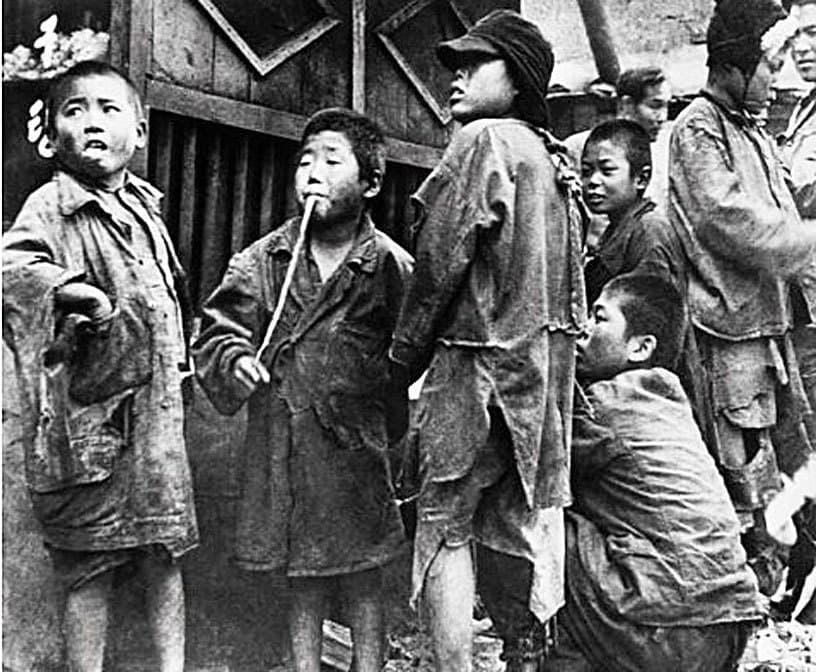
Then Pusan, in the dark, in January. A hundred or more orphaned children swarming a column of soldiers who emptied every pocket into the street and could not look at each other while they did it. Bodies on a rail platform at first light. Leroy said the only thing anybody said: “Oh, my Lord. What else are we going to see in this hell hole?”
VI
The Loss
Twin Hills. A mountain with two summits. June 23–24, 1951.
On the first evening a sniper shot Abel while he was calling Bill's name, and Bill climbed to him and pressed both hands to his back for hours, calling for a medic into a dark that didn't answer. Leroy came running to that hole to ask if they were all right — with a wound of his own already wrapped, waved off as a scratch. Then his squad leader called for him, and he looked at Bill for a few seconds, and he went.
At two in the morning the bugles started, then the flares. Over two thousand men came at three rifle companies that didn't add up to five hundred. Bill looked down toward Leroy's position and saw him standing — upright on an open hillside, the Browning Automatic Rifle against his hip, firing into the front of the charge so the rest of them could get off that mountain.
“And then the whole world went white and loud all at once, and when the light and the noise cleared, there was a hole in the hillside where Leroy had been standing.”
VII
The Memory
Leroy was never found. The Army listed him Missing in Action, and that is what he remains.
He received the Distinguished Service Cross. Bill has read that citation more than a hundred times, and every time he comes back to the same question: another man in that same general action received the Medal of Honor for doing, by every account he can find, essentially what Leroy did. He has written to the Congressional Delegation. He has written to the White House. He has shaken hands with politicians who agreed with every word and never called back.
That is why this book exists. Not to describe a war — the war is only the setting. It exists so that a seventeen-year-old from Kaimuki who couldn't stand the idea of a stranger standing alone in a corner is still spoken of by name.
“He was a hero long before the Army ever sent him to a war.”