Skip to content
William (Bill) Castro — Author, Veteran, Storyteller

03 — The Men

The boys who went.

A cousin, a musician, a thirty-two-year-old who called himself dumb, the smallest man in the unit — and a seventeen-year-old who couldn't stand the idea of anyone standing alone.

Every detail here is drawn from the manuscript. Where it is silent, so is this page.

01

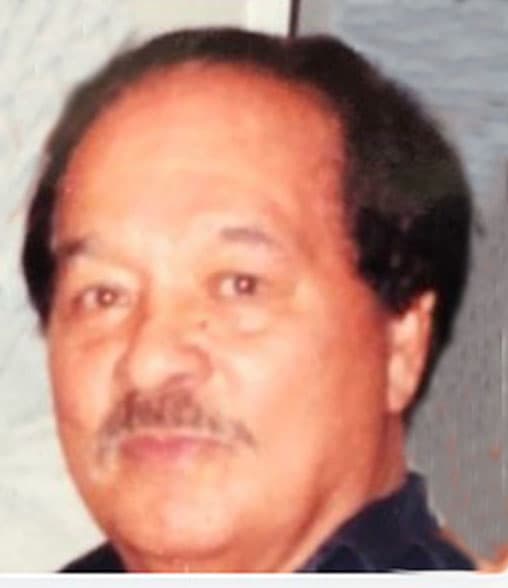
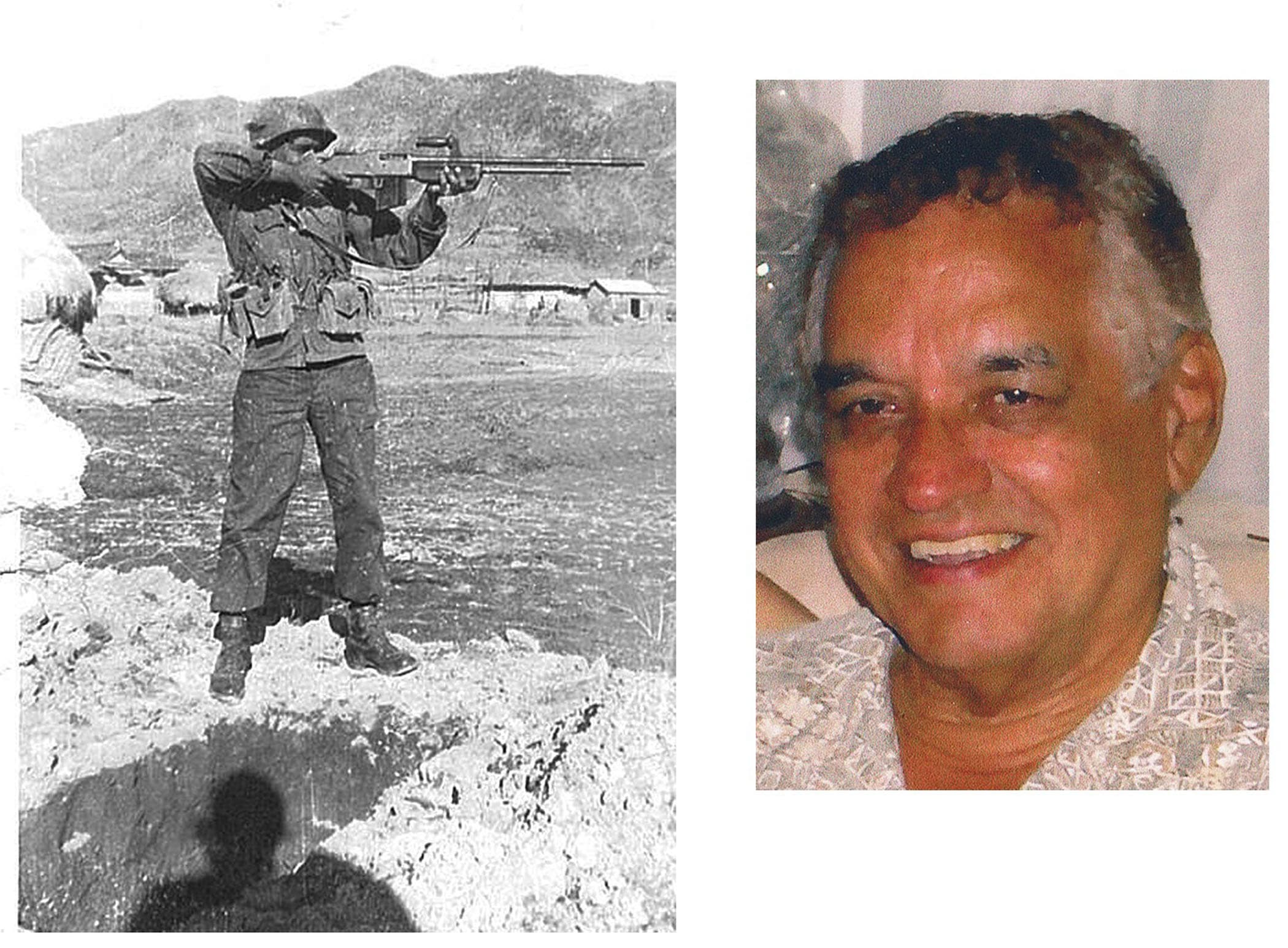
Portrait of William (Bill) Castro

William H. Castro, in later years.

From
Hawaii Island
Age
Eighteen when he signed. Nineteen when they gave him a squad.
In the story
The one telling it

William “Bill” Castro

A boy off the Big Island, son of a Hapu fern farmer who sold two hundred acres and a successful business and moved to Honolulu the moment he heard his son had enlisted — “In case you need me, my son.” Bill went over as an ammunition bearer, took the Browning Automatic Rifle off a man named Jones after his first night attack, and was leading a rifle squad in Company C before he turned nineteen.

  • Swore in at the Ala Moana U.S. Army Recruiting Station in Honolulu with roughly thirty other Island boys, then rode a bus to Schofield Barracks where not one man said a word the entire way.
  • Traded his toast for Joe's hash browns every single morning at breakfast, and never once discussed it.
  • Survived a night attack on a hillside by reassembling a rifle that came apart in his hands, in the dark, by feel — a drill the Field First Sergeant had made them do blindfolded.
  • Took a hit meant for his ribs into a can of corned beef hash carried in his field jacket pocket, and promised himself, half-embarrassed, that he would never call a medic again.
  • Called in an air strike on a valley full of enemy tents on his nineteenth birthday, May 22, 1951, and only mentioned the birthday on the walk home.
  • Held both hands against his cousin Abel's back for hours in the dark on Hill 717, calling for a medic into a dark that did not answer.

That's how you become a Squad Leader in this war. Nobody hands you papers. Somebody bleeds, and then it's you.

Bill Castro

02

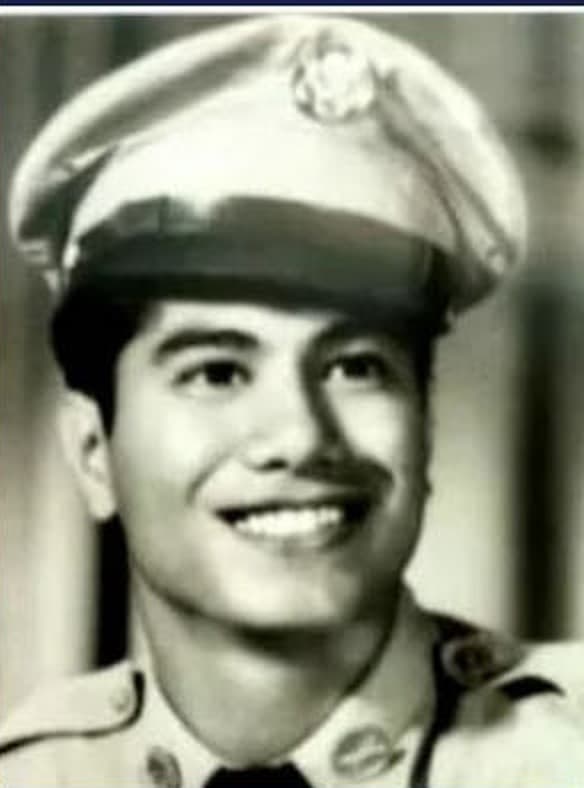
Corporal Leroy Saint John Kauhini in dress uniform

Leroy, photographed on Hotel Street, Christmas Eve 1950. They all took one that day. Only his survived.

From
Kaimuki, Oahu
Age
Seventeen when he enlisted. Eighteen when he was lost.
In the story
The giant under fire

Leroy Saint John Kauhini

Too young to sign his own way into a war — his mother had to sign the papers for him. Five foot five or six. Carried the Browning Automatic Rifle for at least five months and waved off every replacement who could have taken the weight, saying the new men were too small and skinny for it, apparently not noticing he was not a big man himself.

  • On the first disoriented days at Schofield, while everyone else was working up the nerve to introduce themselves, he moved through the barracks getting every name right the first time so nobody was left standing alone in a corner.
  • Finished his own locker before anyone else on G.I. Party night, then went looking for whoever hadn't — shining another man's brass, fixing another man's layout, never saying a word about it.
  • Stepped forward to take a punishment punch meant for Endo, the smallest man in the unit: “No. You're too small to take a punch. I'll take the punishment for Endo.”
  • Sang “Tennessee Waltz” into a borrowed microphone in a basement bar on King Street and dedicated it to Bill, who was the country music man, not him.
  • Carried a ukulele through a flight, a train, a troopship and a war, and every reserve evening drew half the surrounding units in to listen.
  • His mother tucked a note into every package from home reminding him to share. As if he needed reminding.

Take care of Abel and you too, brother. Don't go off doing anything crazy. — Aloha, my brother.

Leroy, the last thing he said to Bill, June 23, 1951

Afterwards

Missing in Action, June 24, 1951. Distinguished Service Cross. Wall of the Missing, National Memorial Cemetery of the Pacific.

03

No photograph
survives

From
Hawaii Island
Age
Twenty — the only one of them old enough to hold an ID.
In the story
Cousin. Squad Leader, 3rd Platoon, Company C.

Abel

Bill's cousin — his aunt's son — and from the day they signed their names until the last day Bill saw him in Korea, the closest thing to a brother he had. He commandeered his mother's 1949 Cadillac for a weekend pass, talked a doorman on Hotel Street into serving four underage soldiers by pointing at their combat boots, and turned into a serious and successful gambler during reserve.

  • Told a Hotel Street doorman, dead level: “This is my squad, and we're on our way to Korea. You can see from our combat boots where we're heading. You going to stop us?”
  • Called Bill “Bro,” and warned him — always the big brother — to stay alert.
  • Shot by a sniper on Hill 717 on the evening of June 23, 1951, while calling Bill's name from his hole up the trail.
  • Pressed his pocketful of gambling winnings on Bill in the dark, saying he didn't know what was going to happen to him.

Afterwards

Survived. The wound on his back healed slow and ugly. He came home to the Big Island and lived a long life there, though he never talked much about Hill 717 to anyone but Bill — and even with Bill it was rare.

04

No photograph
survives

From
Maui
In the story
Musician. Company Runner, Company A.

Joe

A musician who could make a banjo or a borrowed guitar do things you wouldn't expect. The first time he met Bill he asked where his mother was from, heard the name Vicky, and his whole face opened up — he already knew her from the places he played music on Maui. That is how small the Islands are.

  • Backed Leroy on every song, every reserve evening, in a corner of the Service Club and later in the mud of Korea. Joe would find the key and Leroy would find the words.
  • Traded Bill his hash browns for toast every morning of basic training. It sounds like nothing. It wasn't nothing.
  • Appeared out of the dark on Hill 337 as a company runner and took a prisoner off Bill's hands — a problem Bill had no idea how to solve — because he already knew the safe trail down to Battalion.
  • Couldn't get home to Maui on a weekend pass, so he was taken into Bill's father's house and Leroy's mother's house instead, like he'd always belonged there.

Afterwards

Went back to Maui and kept a guitar or a ukulele within reach for the rest of his days.

05

No photograph
survives

From
Oahu
Age
Thirty-two, among a crowd of teenagers.
In the story
The old man of the outfit

Pop Soares

Somebody asked him once, straight out, why a thirty-two-year-old man with no obligation to go was standing in line with a bunch of kids half his age. Pop didn't even pause. The line he gave back handed the whole outfit its sense of humor for the next year — a way of talking about the hardest things sideways, because looking at them straight on was more than any of them were ready for.

  • Set the tone for how the group would survive everything that came after: with a joke, always slightly to the side of the thing itself.

I'm young at heart, and just like you kids — dumb.

Pop Soares, at the recruiting station

Afterwards

Made it home, and lived long enough that Bill got to remind him of that line more than once. He laughed every single time, like he was hearing it for the first time.

06

No photograph
survives

From
Tennessee
Age
Older than the rest. A World War II Navy veteran who volunteered for a second war.
In the story
Commo Chief. The Company Commander's radio on his back.

Roy — Sergeant Munsey

He heard the noise of a Hawaii reserve get-together from a long way off, walked over to see what it was, and never really left. He had put in at Hawaii more times than he could count during his Navy years. He liked the Islands, and he liked these boys on sight because they sounded like the Islands.

  • Spent months trying to learn pidgin off Abel and never once got close, and knew exactly what he was doing. A man doesn't keep failing at something that hard by accident — he was buying his way into a family, and it cost him nothing but his dignity, which he was happy to spend.
  • Could have sent any of his commo men on the May 22 patrol. Strapped the Field 300 radio on his own back and went himself.
  • Looked down into a valley holding close to a thousand enemy troops and said one word: “Jackpot.”
  • First man to answer when Bill mentioned, on the walk home, that it was his nineteenth birthday.

Happy birthday, Billy Boy. I had no idea you were still a boy, Mr. Squad Leader.

Roy, May 22, 1951, on the eastern front

Afterwards

Stayed in the Army for years.

07

No photograph
survives

From
Oahu
In the story
The smallest man in the unit

Endo

Five foot two or three, maybe a hundred pounds soaking wet. He missed the last bus back one Sunday night, and his parents drove him in the next morning, and he walked back into the barracks asking whether he'd missed anything. He had. The whole company was restricted because of it, under an old unwritten rule, and it would not lift until somebody inside the unit took a punishment hard enough to send him to the dispensary.

  • To his credit, he said he'd take it himself. He never got the chance — Leroy was already stepping forward before he finished the sentence.

08

No photograph
survives

From
Oahu
In the story
The tallest man in the unit

David — “Malau”

When the unit needed someone to throw the punch that would lift the restriction, the assignment went to the tallest man they had. He threw it hard enough to do the job properly — a swollen cheek, a black eye, a trip to the dispensary that went on the record just like it was supposed to. The restriction lifted that same afternoon.

  • Neither he nor Leroy ever seem to have held it against each other. It was simply what the situation required, and the two of them were the ones the situation required it of.

09

No photograph
survives

In the story
The man who built them

The Field First Sergeant

He kept a room at the back of the barracks. Every other cadre member went home to a family somewhere; he was the only one who actually lived in that back room, and as far as any of them ever discovered, he had nowhere else to be. He wasn't a man you asked. He walked the length of the bay every evening in a uniform so sharp it looked issued that morning, disappeared without a word, and came back around ten with a slight stagger and the smell of alcohol, and again — not a single word.

  • Woke them every morning at 4:30 at a full bellow: “Get up, you sleeping beauties — it's time to play again!”
  • Went further than the manual required on the M-1 rifle: had them blindfold each other and field strip the weapon and put it back together by feel alone. Months later, in the dark on a Korean hillside, that drill is the only reason Bill had a working rifle when the enemy reached the top of his position.
  • Another cadre sergeant said in front of the whole platoon that the Field First was the kind of man he'd want beside him in a combat situation. Nobody in that formation doubted it for one second.

In our new home, he was our mother, our father, and our big brother, all at once, whether he ever meant to be or not.

Bill Castro

10

No photograph
survives

In the story
Ran the counter at the Service Club — and, as far as any of them were concerned, ran the whole club

Betty Lou

She made them hamburgers and milkshakes, let them shoot pool and bang away at the ping-pong table, and put up with Joe picking at his banjo in the corner while Leroy sang along. Every one of them was privately certain, in that particular way young men convince themselves of things, that he'd be the one to marry her once the war was behind him.

  • In the middle of the hardest weeks of combat training, they joked back and forth: “I'll be marrying Betty Lou when I come back.” “No — she'll be waiting for me, my friend.”

You are all my sweethearts. I love you all, and I want you all to come back safe.

Betty Lou, Service Club, Schofield Barracks

11

No photograph
survives

In the story
Platoon Leader, 2nd Platoon, Company C

Sergeant S — “Sarge”

Bill noticed within days that his platoon leader wore no stripes at all — nothing marking his rank anywhere on the uniform. He had been busted from Master Sergeant all the way down to Private for sneaking down to a village for soji, a Korean homemade liquor. But he was the best platoon leader in Company C, so the Company Commander simply left him where he was. A private doing an officer's job, and every man in the platoon still called him Sarge without a second thought.

  • It was the first genuinely strange thing Bill saw in that outfit, and it stuck with him — not because it was wrong, but because everyone accepted it as obviously right.

12

No photograph
survives

From
Virginia
In the story
Company C — an FBI agent before the war

The Company Commander

The story going around was that he'd been an FBI agent back in Virginia, volunteered for Korea, and been given a direct commission to Captain because of what he'd already proven himself to be. He wasn't as seasoned as most infantry company commanders — Bill could tell that much even as a private — but he called every one of his men by his first name, which Bill never once saw from another officer.

  • The night before he died he told his platoon leaders a story about getting wounded right after eating the green candy that came packed in every C-Ration tin. He told them not to eat it — while eating a couple of pieces himself, right there in front of them, like the warning and the habit could both live in the same man.
  • He took a patrol across the frozen Han River himself and stepped on a mine. From that morning on, every piece of green candy any of them found went straight into the snow. Nobody asked why. Nobody joked about it, not once, and they joked about almost everything.

13

No photograph
survives

Age
Nineteen.
In the story
Replacement, 2nd Squad

Johnson

Green as grass and about as steady on his feet as a man can be his first week on the line. On a point patrol with small-arms fire picking up around them, he dropped his rifle in the dirt, turned, and ran down the slope. Bill picked the rifle up and went back to what he was doing, because the war doesn't stop and wait for a man to find his nerve.

  • He came back up the hill on his own after the summit was taken and said, simply, “Sorry. I just couldn't take it anymore.”
  • He said a big man in a heavy coat had stopped him at the bottom and told him to get back up that hill or he'd shoot him himself — and that when he looked up at the man's collar, he counted five stars. Bill told him he was hallucinating and to keep the story to himself.
  • About a week later a copy of the Army Times came up the line. Front page: General MacArthur Observes the 15th Infantry on a Strategic Attack.

14

No photograph
survives

From
Oahu, Kauai, and every point of the Islands
In the story
The rest of the thirty-some

Aguda · Bonilla · Makaiwa · Kamalu · Louis

Aguda, Bonilla and David from Oahu. Makaiwa and Kamalu, both off Kauai. Louis, who went to Company A. They stood in the same line at Ala Moana that had never existed before that morning and would never exist again in quite that shape, and when they lowered their right hands they were not boys from their separate towns anymore.

  • Alongside the boys from Hawaii there were Puerto Rican soldiers, and men from states Bill had never set foot in — New York, West Virginia, Tennessee, Texas. Out on that line all of it fell away. A man from the Bronx and a man from Kaimuki dug the same kind of hole and ate the same cold hash and watched the same flares go up.

None of us asked where the other one was from before we decided he was worth dying for.

Bill Castro
And the ones this book had no room to name

They bled the same color on the same hills.

Alongside the boys from Hawaii there were Puerto Rican soldiers, and men from states Bill had never set foot in — New York, West Virginia, Tennessee, Texas. Out on that line, all of it fell away. A man from the Bronx and a man from Kaimuki dug the same kind of hole, ate the same cold hash, and watched the same flares go up.